Parked with a parking app, drove off and forgot to end the parking session?
The Parking Reminder app will remind you.
The app notices when the car has driven away from the parking spot and reminds you to end the parking session in your parking app — and it alerts you before your parking time runs out.
Get it on Google Play
Demos
Once you have finished granting permissions to Parking Reminder, you can get the best service as follows.
We'll show you how the app works with Pango. It works the same way with the other parking apps it recognizes.
Tap the blue buttons to watch a demo:
When the app noticed the parking app being opened
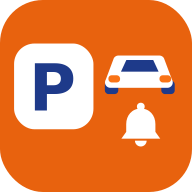
When the app did not notice the parking app being opened
The car drove away. Did you end the parking session?
A spoken alert when the app notices that the car has driven away from the parking spot — and when the phone is connected to the car over Bluetooth, the app tries to play it through the car’s speakers too.
The parking time is running out
A reminder before your parking time runs out — whether at a meter, on a pay-and-display ticket, or on a time you set for yourself.
Back to the car
Your parking spot is saved on the phone, and one tap opens navigation back to it — in Google Maps or Waze.
A photo of the parking spot
In a big parking garage a coordinate does not say "level minus 3, pillar J". So the main screen lets you photograph the parking spot — the level, the pillar, the sign — and the picture reminds you where the car is.
Your location stays with you
The parking spot and the photo are kept on the phone only. They are not sent to us. The only outbound request: the phone passes a point to Android’s address service — the parking spot, and on the emergency screen your current location — to get the street name; the address comes back to the phone and stays there. They leave the phone only when you choose to share them with someone.
What the app does
Each feature, and the screen where you use it.
Ready for parking — the app notices you opened a parking app
Two ways to start watching a parking with a parking app:
- The convenient way — open your parking app as usual: EasyPark, PayByPhone or any other parking app that our app recognises. Within seconds a small card appears on top of it: “Watch your parking with EasyPark?”. One tap on “Yes, watch it” — and the parking is now being watched. No need to remember to open our app. And if you are not starting a new parking right now — answer “Not now”, and the card is gone. The next time you open the parking app, we will ask again.
- The second way — open our app and tap the “Watch my EasyPark parking” button (or the one for your parking app). The watch starts, and the parking app opens so you can pay in it.
In both ways our app provides additional services that complement those of the parking app.
Note: for us to notice the start of a parking, the parking app has to be opened. If the parking app has been open for a long while and you start a parking inside it, we will not notice the start; in that case start from our app (the second way).
More on this – Ready for parking — the app notices you opened a parking app
What is essential for this to work: all six permissions (see the “Permissions” chapter). Three of them — usage access, display over other apps and no battery restriction — are what let us notice that you opened a parking app, and they are requested right after you choose the language. If a permission is missing, there is no service until you grant it. You can grant it at any time in the “App permission status” section in Settings.
The sign that the app is ready: a persistent, silent notification, “Ready for parking”, in the notification drawer. The app checks one thing only — whether a parking app came to the front — and only while the screen is on.
A time reminder for a parking-app watch that started from the card can be added later: the active-parking screen shows the time buttons, and a time reminder can be added after the watch has begun. The time is counted from the start of the watch.
A parking at a meter or with a pay-and-display ticket is started from our app.

The floating sign
While a parking is being watched — and our app does not fill the whole screen, or you are in another app — a small icon of our app appears over the screen, with a ring around it that alternates between blue and white. It is the sign that the watch is on.

The floating sign works for a parking at a meter or with a pay-and-display ticket just as it does for a parking with a parking app.
One tap opens three choices: "Stop watching this parking" — the same button as on our screen; "Open the app"; and "Cancel", which puts the icon back. If you choose nothing, the icon comes back by itself after a few seconds. You can drag it with a finger anywhere on the screen, and it stays there for the parkings that follow.
More on this – The floating sign
What it needs: the “Display over other apps” permission. For a parking with a parking app it is always there — it is one of the six permissions. For a parking at a meter or with a ticket it is not required: if you granted it, the icon appears there too; if not, the sign is the watch’s persistent notification in the notification drawer.
Demo — see how it works
On the main screen, in the row of links — Guide · Demo · Write to us — the “Demo” link opens a list of short videos, filmed on a real phone with Pango. Tap a blue button and the video plays full screen: short captions explain each step, and the app’s own voice is heard just as you will hear it in a real parking. Some captions pause the video for a few seconds so you have time to read.
More on this – Demo — see how it works
The videos come in two parts:
- “When the app noticed the parking app being opened” — Scenario 1: you parked and ended the parking, and the app detected it all — one tap to start the watch and one tap to stop it. Scenario 2: you parked, forgot to end the parking and drove off — the app alerted you, and you stopped the watch with a tap on the floating icon.
- “When the app did not notice the parking app being opened” — A2: starting the watch from our app. B3: stopping the watch from the app’s main screen, which you reach by tapping the floating icon. B4: stopping the watch by tapping the floating icon and choosing “Stop watching this parking”.
Tapping the screen while the video plays shows or hides the title and the “Back to the demo list” button. After the video ends, a tap on the screen plays it again.
The “Demo” link is shown when no parking is being watched. Hebrew and English have their own videos; in the other languages the English video is shown, with captions and voice in the app’s language.
Start next to the car
Next to the car, tap the way you are paying — a parking app, a meter, or a pay-and-display ticket. The watch then starts, and if you chose a parking app, it opens as soon as our app has finished speaking, so you can start your parking session there as usual. If your phone is muted and there is nothing to hear, it opens straight away.
Above the payment buttons you can choose the parking time: 30 minutes, 1 hour, 2 hours or "Other…". As soon as you choose a time, a slider appears where you set how many minutes before the end of the parking time the reminder arrives — between 5 and 30 minutes.
More on this – Start next to the car
The watch-start screen is where you start the watch. It has one button for each parking app installed on the phone, plus another for a meter or a pay-and-display ticket. You set the parking location and start the parking session in the parking app, and only then does charging begin. Until you do that, no parking session has started and nothing has been charged.
Start the watch next to where the car is parked, so that the parking spot recorded in the app is accurate. The distance from the parking spot and the movement of the phone are what we use to detect that the car has driven away — which is why an accurate location matters. If the watch is started far from the car, the drive-away alert may arrive too early or too late, and the navigation back will take you to where the watch was started rather than to the car.
Transcript – This is how it sounds — the watch has started
Parking watch is on.
The screen while parked
Once the watch has started, the screen shows that it is active, which app you paid with, and when the parking started. Below are the useful actions while parked: stopping the watch, navigating back to the car, "Say it again", and photographing the parking spot.
There is no need to keep the app open. Once the watch has started you can leave the app — it keeps watching in the background.
You leave with the phone’s Home button (the ◯ circle in the middle of the bottom row of the screen, or a swipe up from the bottom of the screen), the phone’s Back button (the ◀ triangle at the bottom of the screen, or a swipe in from the edge of the screen), by switching to another app, or by swiping the app away from the recent-apps screen. Even when the app is not on the screen, the floating icon appears over the screen and shows that the watch is on.


When the car drives away from the parking spot
When the app notices that the car has driven away from the parking spot, it reminds you to end the parking session in your parking app — so you do not keep paying after you have left.
More on this – When the car drives away from the parking spot
The alert arrives only when both conditions are met together: you are far enough from the parking spot, and the phone is moving at car speed. Walking away does not trigger it — you can go out for a coffee and come back without us bothering you.
Our watch and your parking app run separately: ending the parking session in your parking app, or closing the parking app itself (EasyPark, ParkMobile and so on), does not stop our watch — we cannot know whether you ended the session in the app or not. Finished parking? Stop our watch too, with "Stop watching this parking". If you do not stop the watch, the app keeps running in the background, alerts you if there is anything to say (including a time reminder you set), and after a while shuts itself down gently.
Transcript – This is how it sounds — the drive-away alert
This is a message from Parking and Drive Away Reminders: it looks like the car is driving away from the parking spot. Please make sure the parking session was ended in your parking app, to avoid paying for nothing.

Stopping the watch
Done parking and ended the session — in your parking app, at the meter or with the pay-and-display ticket? Stop our watch too, in one of three ways:
- Press the red button "Stop watching this parking" on the app's screen.
- If the floating icon is on the screen — a tap on it opens a menu with the same button: "Stop watching this parking".
- If you paid with a parking app: if you open the same parking app again during the watch, we ask whether you've ended the parking. A tap on "I've ended it or will now" — and the watch stops.

If you forgot where you parked
The recorded parking location serves you too: the "Where did I park? Navigate me to my car" button will take you there — in Google Maps on a walking route, or in Waze on a driving route, as you prefer.
The button is shown to the user only while the phone holds a location from the last parking; when there is none, it is not shown at all.

A meter or a pay-and-display ticket
Use the time buttons to set how long you paid for, and on the slider that appears below them how many minutes before it ends you want to be reminded — between 5 and 30 minutes. When the time comes, the phone tells you that your parking time is about to run out.
Transcript – This is how it sounds — the time reminder
This is a message from Parking and Drive Away Reminders: the parking time you paid for is about to end. It is worth returning to the car or buying more parking time.

The parking photo
The main screen lets you photograph the parking spot — the level, the pillar, the sign — and the picture reminds you where the car is. Tap it to enlarge it.
More on this – The parking photo
The picture is taken by the phone’s own camera app, so the app never asks for a camera permission at all. It is kept inside the app only — not in the gallery, and never sent to us. A line with the time and the recorded address is burned onto the picture; if there was no address, it shows the coordinates and their accuracy. One picture at a time: a new one replaces the previous. It stays after you stop the watch, and is deleted when you start a new parking, when the watch closes by itself after a drive was detected, or when you tap "Delete the photo".

No need to look at the screen
Didn’t catch what was said? The parking screen has a "Say it again" button — tap it to play the last message again. You can repeat it as many times as you need. If at that moment the phone cannot be heard — because the media volume is 0 or Do Not Disturb is on — the message is shown in writing instead of being played.
The main message channel is voice. That way the message arrives even when the phone is in a pocket, even while driving, and even when the screen is locked — and it does not depend on you looking at the screen at the right moment.
More on this – No need to look at the screen
The voice comes out of the phone — and when the phone is connected to the car over Bluetooth, the app tries to play it through the car’s speakers — at the same volume as videos and music. If we suspect the voice is not being heard, the message is shown in writing.
When the phone is muted, the spoken alert will not be heard. When you switch the text channel off, the app asks what to do when the phone is muted — and if you chose "Write when muted", a written message appears whenever the voice cannot be heard. You can add temporary text messages to the voice messages — ones that pop up on the screen and disappear by themselves — by ticking the box on the Settings screen. When the phone is connected to the car’s Bluetooth, our aim is for the message to be heard through the car’s speakers — that is where it reaches you while you are driving. There is nothing for you to set up in the car’s system; it happens by itself. In some cases the message may be heard from both the phone and the car’s speakers.

The emergency call button
It contacts the people you chose in advance, and does not call the emergency services.
One tap opens a screen with each helper you set up on a separate row — and one more tap opens a call to them, or a WhatsApp message or an SMS already written — you press send.
More on this – The emergency call button
First you set it up once: on the emergency helpers screen you choose up to three people from your contacts and add your own name.
The message includes who you are, the time, where you are at that moment — street and city — a Waze link to your location, and that you need help; you can add a line of your own, which is saved so you do not have to type it at the moment it matters. On the same screen there are attention signals that work before anyone answers: a steady light, a flashing light, and a siren — each one turns on and off with a tap. Your helpers are kept on this phone only, and their numbers are never sent to us.

What you can change in Settings
In Settings you change the interface language, how you pay for parking, how we alert you (including quiet at night) and "My car"; that is also where you complete the app’s missing permissions and purchase the app.
More on this – What you can change in Settings
Under "How do you pay for parking" you choose which parking apps have a button on the watch-start screen — full details are in the next section, "The parking apps".
Under "How we alert you" you turn on the text channel.
On the same screen you can also change the text size — on the Settings screen and in the guide — and open the guide, "Write to us", and the terms of use.

The parking apps
The list of parking apps is built by the phone itself, so a recognised parking app installed on your phone appears on the watch-start screen automatically.
More on this – The parking apps
In Settings, under "How do you pay for parking", everything is in one place: an option for a meter or a pay-and-display ticket, and a checkbox for every parking app found on this phone. Each selected option gets a button on the watch-start screen, and at least one payment option must stay selected.
If your app is not on the list, the same place has a "Missing a parking app?" line. Tapping it opens the phone’s list of apps, and whichever app you choose will then behave like any other parking app. An app added this way can also be removed from the list. An app detected automatically stays as long as it is installed, and you can hide its start button by clearing its checkbox.
When you start the watch we open the parking app you chose, after our app has finished its message. When the car drives away from the parking spot we remind you to make sure you ended the parking session. The drive-away alert does not open your parking app automatically — it only reminds you.
When you are using a parking app you can also turn on a time reminder — one you set for yourself, in addition to the alert that arrives when the car drives away. On the watch-start screen you decide whether you want a time reminder for the parking; the default is no. If you want one, set the parking time by tapping one of the buttons — 30 min, 1 hour, 2 hours or “Other…” — and also set how long before the parking time ends the reminder should arrive (5 to 30 minutes). Note: the time reminder stays active even if you have meanwhile closed the parking app — it ends only with the watch, when you press "Stop watching this parking".

Permissions — essential, not optional
To provide its service the app needs permissions from Android, and Android requires each one to be approved separately.
The permissions are not optional — they are essential. Without them there is no service: the app will not notice that you opened a parking app, will not notice that you drove away from the parking spot, and the reminders will not arrive on time. Watching a parking-app parking starts only when all six permissions have been granted. A parking at a meter or with a pay-and-display ticket starts when its four permissions have been granted: location, notifications, alarms and no battery restriction.
More on this – Permissions — essential, not optional
When they are requested: right after you choose the language — three permissions: usage access, display over other apps, and no battery restriction. The other three — location, notifications and alarms — are requested when you start your first parking.
Worth knowing: a reminder that arrived late or not at all almost always comes down to a permission that was not granted. When all the permissions are granted, the reminders arrive on time.
A permission you have granted stays in effect after app updates. Uninstalling the app completely deletes it and its permissions, and installing it again then requires granting them again.
The “App permission status” section shows at any moment what has been granted and what is missing, and lets you grant any missing permission. If you revoked a permission in the Android settings, the main screen will say so and send you to Settings.

Write to us
The "Write to us" screen is mainly there to talk to us: to report a fault, or to suggest an improvement. Write a few words about what happened or what is missing, and send.
More on this – Write to us
The app’s event log is always sent along with the report. It is what makes a report useful, because it shows us what the app actually did and not only what appeared on the screen.
What reaches us: what you wrote, the event log and your phone model. What never reaches us from this screen: locations, your real name, your phone number, your email address, photos and recordings.
If you want to send us a recording or a photo, you can send them from your own mailbox to parkingreminderalerts@gmail.com. Your email address then reaches us, and you do that by choice and at your own responsibility.
The same screen also lets you share a parking spot with a friend or with yourself. There you choose the app and you choose the person, and only what you tick is shared — the parking spot, where you are now and the photo. That goes from your phone straight to them and does not pass through us.

Personal messages from us
When the developer sends you a personal message, a flashing pink line appears: on the app’s main screen, and also on the card shown when a parking app is opened. Tapping the line shows you the message right there — without leaving the parking app. Tapping "Got it" marks it as read, and if more messages are waiting, they are shown one after the other. A message you have not read does not disappear: the line comes back the next time you open it, until you read it. Some messages are written by the app itself on the phone, with no communication at all; they appear in this line too.


The automatic report
From time to time the app sends us an automatic technical report, so we can see how it performs in real use — mainly when something did not work as expected. That is how we learn about problems even when nobody has written to us.
More on this – The automatic report
What is sent: the event log, your phone model and version, the interface language and the phone’s country, an install id, app usage counters, the trial and purchase status, and the kind of fault detected. The log also records the names of the Bluetooth devices the phone connects to, such as the car; the name of a hearing aid is not recorded. What is never sent: a location, a photo or a recording.
In the first month after installation the automatic sending is always on, so we can find and fix faults across versions and phone models. Even then it includes no location, photo or recording.
After the month, users who paid can switch it off on the "Write to us" screen; if you switch it off, our ability to handle problems on your phone is reduced, and that is your responsibility.

What people say about us
- Kan 11 — Israel’s public TV channel, the news program “Kan BeShesh” · 15 September 2026, 18:50 — a report on the app and its developer, in Hebrew. It is the last item in the program. Watch on the Kan website (opens in a new window)
- Geektime — the Israeli technology site · 12 September 2026 — an article on the app, in Hebrew. Read on Geektime (opens in a new window)
- TuttoAndroid — an Italian technology site · 4 September 2026 — an article on the app, in Italian. Read on TuttoAndroid (opens in a new window)
- CNET Download — CNET’s download site · 5 October 2026 — an analysis of the app, written with AI assistance. Read on CNET (opens in a new window)
And what users say — in the reviews on Google Play (opens in a new window).
Questions and answers
What does Parking & Drive Away Reminders do?
It reminds you of two things: to end your paid parking session after the car has driven away from the spot, and to deal with the parking before the time runs out.
Along the way it also saves your parking spot so you can navigate back, lets you photograph it, and includes an emergency call button.
What is the difference between the two alerts?
The drive-away alert arrives when we notice that the car has driven away from the parking spot, and reminds you to make sure you ended the parking session in your parking app. The time reminder tells you that your parking time is about to run out — whether it is time you paid for at a meter or on a pay-and-display ticket, or time you set for yourself when you parked using a parking app.
Note: the drive-away alert works when you are using a parking app. When you pay at a meter or with a pay-and-display ticket, only the time reminder runs.
Do I have to start the watch every time I park?
Yes. Every time you park, start the watch next to the car: choose in the app how you are paying, or open your parking app and tap “Yes, watch it” on the card that appears over it.
It matters that you do it next to the parking spot: that is what the distance is measured from, and that is where the navigation will bring you back to.
What happens if I forgot to start the watch when I parked?
Without starting it we have no parking spot, so no drive-away alert will arrive.
And if you start it later and somewhere else — the spot that is saved is the place where you started it, not where the car is standing. To avoid this: with a parking app, opening the app brings up a card — and a tap on “Yes, watch it” starts the watch.
Does the app end my parking session in EasyPark or ParkMobile for me?
No. When you park, it opens the parking app you chose, and you start the parking session there as usual. When the car drives away it reminds you to end the session — it does not end it itself, and it does not know whether you did.
What it does notice: if the parking app was last used on this phone more than ten minutes before the drive, the drive-away alert is worded more firmly — because to end a parking session in the app you have to open it, so the session is likely still running. This needs the usage-access permission, and the check looks back up to twelve hours.
I forgot to end my parking session — what now?
End it now, even late. Then check your parking history to see what was charged, and if the charge is excessive and does not seem fair, you can contact the parking app’s customer service or the city.
Read more: what happens to the charge, and how to attach evidence if you appeal
How will I hear the alert in the car?
Through the phone’s speakers — and when the phone is connected to the car over Bluetooth, the app tries to play the message through the car’s speakers.
What happens if there is no GPS reception?
Indoors or in an underground garage there is no satellite reception, and that is entirely normal.
The app notices this and shows a single silent notice, then removes it when reception returns. The time reminder works regardless, because it is based on time rather than location.
How much does the app cost?
The download and the trial are free, with no credit card required. The trial lasts a month, with no limit on parking sessions.
After it, a one-time lifetime purchase through Google Play — launch price since October 2026: $10 — with no subscription and no recurring charge. The price stands until we change it.
Will I be charged automatically when the trial ends?
No. You do not provide any payment details for the trial, so you cannot be charged automatically.
Which parking apps does it work with?
The app automatically detects the parking apps installed on your phone — EasyPark, ParkMobile, PayByPhone, SpotHero, ParkWhiz, Passport Parking, RingGo, JustPark and others — and shows a start button for each. There is also a button for a meter or a pay-and-display ticket, and you can add an app we do not recognise.
Does it send my parking spot to anyone?
Not to us. The parking spot stays on the device and is for you only — to navigate back to the car, or to share with a friend if you choose to. The only outbound request is to Android’s address service, which returns the street name to the phone.
Do I need to keep the app open?
No. Once the watch has started you can leave the app — with the phone’s Home button, the phone’s Back button (the ◀ triangle at the bottom of the screen, or a swipe in from the edge of the screen), by switching to another app, or by swiping it away from the recent-apps screen. The app will not be on the screen, but the watch keeps running in the background, and the floating icon appears over the screen as the sign that the watch is on (if you allowed “Display over other apps”). Note: the X in the corner of the app’s screen does more than close. During a watch it asks “Close the app?” and offers two choices: “Stop and exit”, which ends the watch completely, or Cancel, which takes you back to the app’s screen, and the watch goes on.
For every watched parking, an ongoing notification also shows that the watch is active, as long as you have allowed the app to show notifications.
Will it drain my battery?
While a watch is active the app uses location, so it uses more battery than when idle. After both alert rounds are over it turns location off and, a few seconds later, ends the watch by itself; when you stop the watch, everything stops at once.
What is the emergency button?
One tap opens a screen with the helpers you set up in advance. With one more tap you can call any of them, or send them a WhatsApp message or an SMS carrying a prepared message with your location. The same screen also has a steady light, a flashing light and a siren.
Does the emergency button automatically alert the police or an ambulance?
No. The button contacts only the people you chose in advance.
It is not a substitute for the emergency services and does not alert them. In a real emergency, call your local emergency number.
Which languages does the app speak?
Six: Hebrew, English, German, Spanish, French and Italian — both the screens and the voice alerts. You can change the language in Settings.
Ready to try it?
A month free to try, with no limit on parking sessions — no credit card and no payment details required. After it, a one-time payment — launch price since October 2026: $10.
Get it on Google Play